
Equine-Assisted Learning
This MonthCarrying the Weight
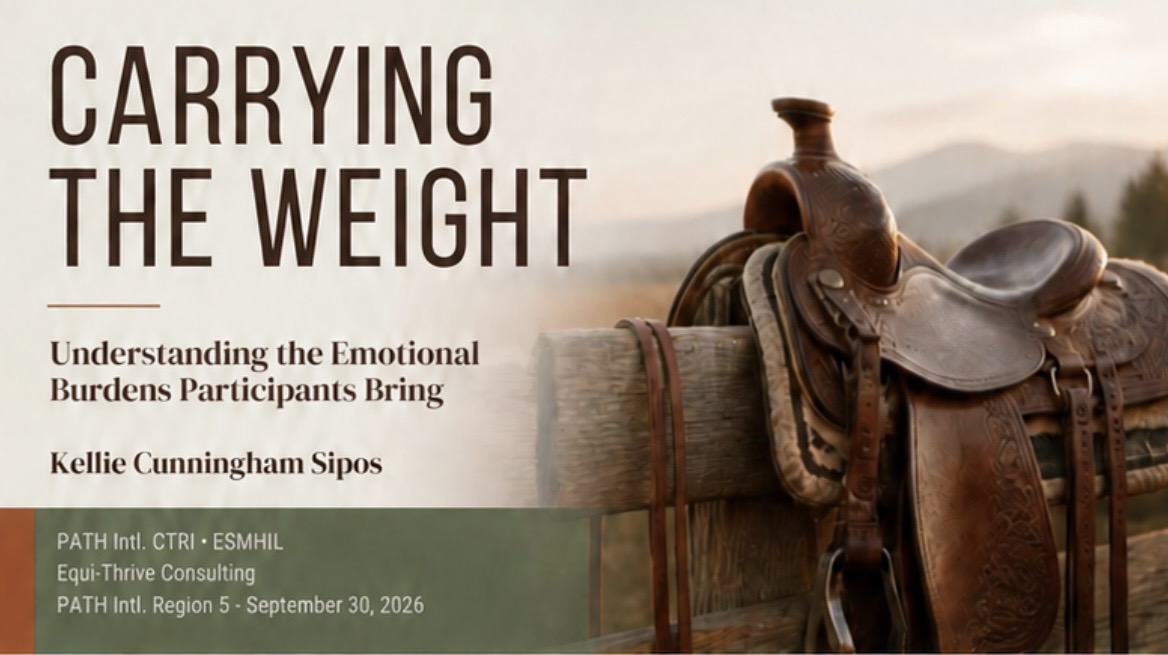
A powerful ground-based lesson that uses the physical weight we carry to explore the emotional burdens participants hold — and what it looks like to set some of that weight down. Includes separate lesson plans for standard, child, and faith-based groups, plus the complete PATH Region 5 presentation.
Age Range
Teens and adults (adaptations included for children and faith-based groups)
Learning Objective
Participants will identify the burdens they carry, experience how added weight affects movement and willingness, and name one burden they are ready to share or set down.
Materials Needed
- A calm, well-mannered horse and a safe enclosed space
- Backpacks or bags and a collection of weighted objects (books, rocks, or sandbags)
- Printed lesson plan for your group type (standard, child, or faith-based)
- Whiteboard or flip chart and markers
Step-by-Step Instructions
- Download the lesson plan that fits your group: standard, child, or faith-based.
- Gather participants and introduce the idea that everyone carries weight others cannot see.
- Invite participants to add a weighted object to a pack for each burden they name.
- Let participants (or a volunteer horse, where appropriate) feel the difference the added weight makes.
- Process the experience as a group: what changed as the weight grew?
- Close by inviting each participant to remove one weight and name one step toward setting that burden down.
Adaptation Ideas
- Use the Child lesson plan for younger participants, with simpler language and shorter discussion.
- Use the Faith lesson plan for faith-based groups, with scripture connections included.
- For groups without horse access, run the activity with participants carrying the packs themselves.
- For sensitive groups, let participants pass on sharing aloud and write privately instead.
Safety Considerations
- Follow your program's standard arena and horse-handling safety rules at all times.
- Keep weights moderate and check with participants before adding load to any person or animal.
- Be prepared for emotional responses; have a quiet space and a support plan ready.
- Only qualified personnel handle the horse during the activity.